
-
-
-
-
SERVICE

-
JOIN US

-
CONTACT US



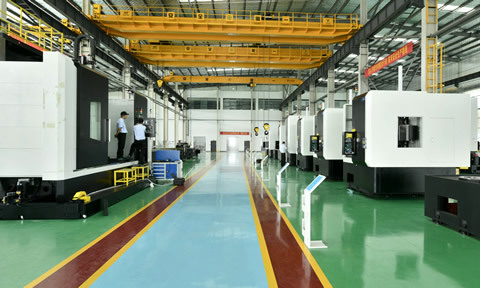

The main differences between a high-speed lathe and a regular lathe are as follows: 1. **Speed**: High-speed lathes operate at much higher spindle speeds compared to regular lathes, allowing for faster machining and improved productivity. 2. **Design**: High-speed lathes are typically designed with more rigid structures to withstand the increased forces generated at higher speeds, while regular lathes may have a more standard design. 3. **Applications**: High-speed lathes are often used for precision machining of small parts and components, while regular lathes are used for a wider range of machining tasks, including larger and heavier workpieces. 4. **Tooling**: High-speed lathes may require specialized tooling that can handle the increased speeds and heat generated during machining, whereas regular lathes can use standard tooling. 5. **Cooling Systems**: High-speed lathes often have advanced cooling systems to manage heat buildup, while regular lathes may have simpler cooling methods.
Release time:
2024-11-29
The main differences between high-speed lathes and ordinary lathes lie in their design, performance, and application fields. High-speed lathes are high-speed, precision CNC lathes primarily used to meet the needs of industries such as aerospace, aviation, instrumentation, electronic information, and bioengineering. In contrast, ordinary lathes are the most widely used type of lathe, mainly used for processing various types of workpieces such as shafts, discs, and rings, utilizing corresponding tools and accessories for various machining processes.
The main differences between high-speed lathes and ordinary lathes lie in design, performance, and application fields. High-speed lathes are high-speed, precision CNC lathes, mainly used to meet the needs of industries such as aerospace, aviation, instruments, meters, electronic information, and bioengineering. Ordinary lathes, on the other hand, are the most widely used type of lathe, primarily used for processing various types of workpieces such as shafts, discs, and rings, using corresponding tools and accessories for various processing operations.
Characteristics of High-Speed Lathes
High-speed lathes have the following characteristics:
High Speed: Uses high-frequency motor spindles and high-power drive devices to achieve high-speed processing.
Precision: Lightweight design of machine components improves processing accuracy and surface quality.
Efficiency: This includes not only the equipment itself but also the integration of the lathe, tools, tool holders, fixtures, and CNC programming technology, aimed at achieving efficient processing.
Characteristics of Ordinary Lathes
Ordinary lathes have the following characteristics:
Wide Application: Ordinary lathes are the most widely used type of lathe, accounting for about 65% of the total number of lathes.
Versatility: Capable of processing various types of workpieces such as shafts, discs, and rings through multiple processing operations, such as internal and external rotating surfaces, end faces, and various internal and external threads.
Traditional Application: Although the technology is relatively traditional, it still has important applications in many industrial fields.





E-mail:meishenmeike@163.com
Zip Code: 226600
Add: No.68,Huangziliang Rd,Qutang Town, Hai'an City,Jiangsu
MEICO

Follow us